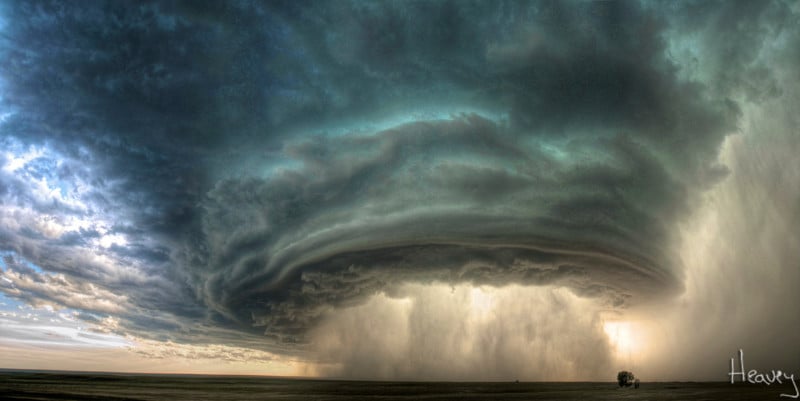
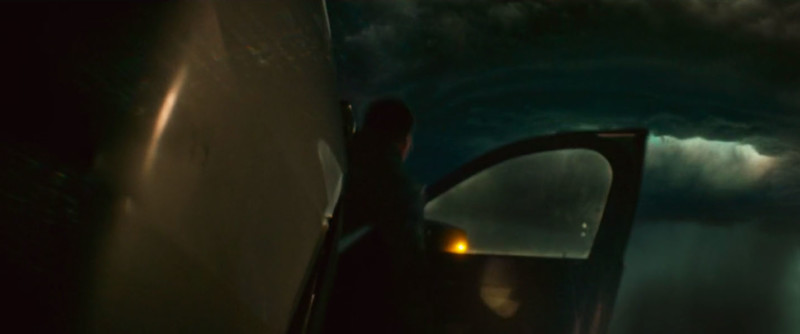
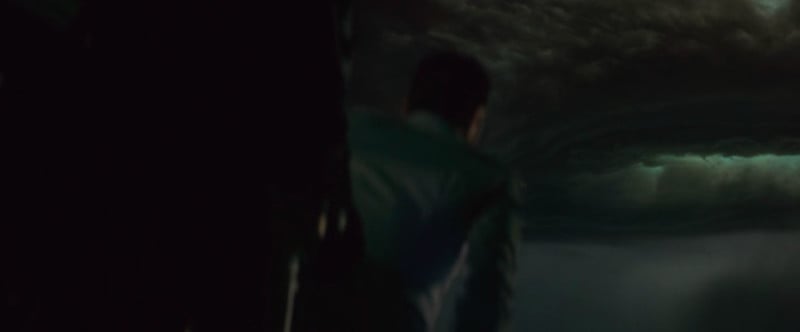
Photographer Sean R. Heavey filed a copyright infringement lawsuit against Netflix for using one of his photographs as concept art for Netflix's Stanger Things and Beyond Stranger Things without his permission. Heavey's photograph, "The Mothership", was taken in 2010 when he was chasing a storm in Montana. That same year, he registered the copyright for the photo with the United States Copyright Office. Additionally, Heavey states that he found his photograph being used in Netflix's movie, How It Ends.
Netflix however, is refusing to acknowledge that they used Heavey's work. Jarin Jackson, Netflix's attorney, said that the cloud formations are similar but nothing else. Jackson stated, "Copyright law, however, does not protect objects as they appear in nature." In the lawsuit, Heavey says that he has suffered damages since Netflix copied and distributed his photograph. He states that Netflix has appropriated his photograph and has opened it up for others to use it without his permission. Heavey filed this lawsuit to further prevent Netflix from using "The Mothership".
https://petapixel.com/2018/09/18/photographer-sues-netflix-for-using-his-storm-photo-for-stranger-things/
Stranger Things:
via GIPHY
"The Mothership":
How It Ends:
Part II: Legal Questions Raised
- Did Netflix use Heavey's name, picture, likeness, voice, or identity for commercial or trade purposes without his permission?
- Was Heavey emotionally harmed?
- Is this an appropriation and right of publicity suit?
- Can this photo be identified by another person and say that it matches Netflix's concept art?
- Is Heavey considered "rich and famous"?
- Has Heavey been financially harmed?
- Does Netflix's attorney make a reasonable argument saying that copyright does not protect things seen in nature?
Part III: Relevant Doctrine
Appropriation
The plaintiff must prove:
- Name, picture, likeness, voice, or identity used for commercial or trade purposes without consent
- Publication: Widespread distribution
- Identification: Of and concerning the plaintiff
Right to Publicity:
- usually for the rich and famous
- deals with financial harm
- appropriating a person's right to profit
Applying it to Heavey's complaint...
Appropriation:
Appropriation:
- Technically, Sean R. Heavey's is not being used for appropriation but his work is for commercial purposes without his consent (assuming that the photo is the same as the concept art used by Netflix).
- Netflix has more than a million subscribers many of whom watched Stranger Things and How It Ends.
- The article does not state that other people noticed this similarity between the photograph and the art but Heavey did notice it when he watched Beyond Stranger Things.
- Sean R. Heavey worked in the United States and internationally as well as published his work on various media platforms.
- The professional photographer has been financially harmed because he has not received any profits/payment for Netflix's use of his photo for their concept art. They have advertised them image internationally and have over a million subscribers worldwide.
- Heavey does have a right to reap some of the profit that Netflix has made from his photograph because it has jeopardized how he can claim copyright.
In relation to the questions posed, Heavey was not emotionally harmed by the actions taken by Netflix but they do need to pay for the loss of profit they caused the photographer. Sean R. Heavey has published many of his works in newspapers, national and international magazines, etc. so, he can be considered a well-known professional photographer.
The doctrine does apply to Heavey's "The Mothership" photograph because there are major similarities between the two. I believe that it would depend on the judge's own opinion if the photograph relates the concept art. That is one of the main issues with these types of lawsuits because of its subjective evidence. If I were to decide, it does seem that both images are similar and Netflix would have to pay damages to Heavey because they used it in their advertisement of Stranger Things without the photographer's permission. However, it seems difficult to prove that Netflix appropriated "The Mothership" in How It Ends because the image is blurry and dark. It is very similar to general apocalyptic doom themes.
The doctrine does apply to Heavey's "The Mothership" photograph because there are major similarities between the two. I believe that it would depend on the judge's own opinion if the photograph relates the concept art. That is one of the main issues with these types of lawsuits because of its subjective evidence. If I were to decide, it does seem that both images are similar and Netflix would have to pay damages to Heavey because they used it in their advertisement of Stranger Things without the photographer's permission. However, it seems difficult to prove that Netflix appropriated "The Mothership" in How It Ends because the image is blurry and dark. It is very similar to general apocalyptic doom themes.

No comments:
Post a Comment