Friday, November 30, 2018

Media Law in the News IV

Part I: Summary
This past October, Gil Botello filed a lawsuit against Ted Sanchez for distributing false information to the San Bernardino community about him (Botello) during the San Bernardino City Council elections. Both candidates are running to represent Sanchez’s campaign mailer distributed filers that accused Botello of being charged with a criminal offense and portrayed Botello as “a deadbeat crook and cheat” when he filed for bankruptcy in 2009. In the lawsuit against Sanchez, Botello claims that the mailer “shows fake case numbers”, misconstruing Botello’s reputation even more.

When Sanchez was asked about Botello's rejection of the claims made in the mailer, Sanchez said that two independent background checks were made and showed a criminal case was made against Botello. However, Sanchez did not provide any physical evidence to support these "background checks" were done. The Southern California News Group searched databases but did not find anything that supported neither Botello's or Sanchez's claims.

After the flier had been given to residents, Sanchez was issued a cease and desist letter. However, Botello’s attorney says that afterward a second mailer was sent out by the committee that made even more defamatory statements. Botello says that these fliers will negatively affect how the 1st Ward residents will view and treat him. Botello is seeking $500,000 in damages.

Part II: Questions Raised


  • Did one or more people see this material published?
  • Is the defamatory material clearly written about the plaintiff?
  • Was a criminal case ever brought against Botello?
  • If the story about Botello was true, would the community think less of him? Would this information ruin/damage his reputation and future career choices?
  • Are Botello and Sanchez considered public figures or public officials?
  • Is the information on the campaign mailer considered a part of political speech?

Part III: Relevant Doctrine
Test for libel:
 Publication: Seen or heard by a third party
Identification: The story is “of and concerning” the plaintiff
Defamation: Injury to reputation, what other people think about the plaintiff
Fault:

  •            Actual Malice (wall of bricks)- Knowledge of falsity OR,
  •            Negligence (one brick)- Reckless disregard for the truth
·     Falsity: The statement is not “substantially true” if the “gist” of the statement is substantially true, then a court will not find it to be false.
·       Damages: Three different categories…
1.       Damages for the plaintiff’s actual injury to compensate the plaintiff for injuries (need to prove actual malice)
2.       Punitive damages, to punish the defendant (need to prove actual malice)
3.       Presumed Damages, can’t prove but presume loss

Applying the test:
Publication: The campaign mailer was sent out to the 1st Ward residents, so the court can assume at least one-third party has seen/heard about the flier.
Identification: The flier was specifically about candidate Gil Botello.
Defamation: The information on the flier (if false) would make a substantial and respectable minority of the community to think less of Botello because of the claims made. Botello would not be elected to represent residents in the San Bernardino City Council. The flier created distrust in the community against Botello, therefore, hurt his job.
Fault: The plaintiff must prove that Sanchez new of the damage he would cause him (Botello) in the election. Botello would need to provide evidence that there was never a criminal record/case against him.
Falsity: Botello would have to prove falsity because if the story would be accurate then that would have destroyed his chances of getting elected to the city council.  If the story were true it would affect his career and the possibility of ever getting elected.
Damages: In order to receive any punitive damages and/or presumed damages, Botello would need to prove actual malice. Presumed damages would mean that if Sanchez had not published defamatory against Botello, could Botello have potentially been elected to city council?


Part IV: Conclusion

After taking this lawsuit through the libel test, I think that if Botello can prove that there was no criminal case made against him the judge would rule in favor of him. When Sanchez was asked about the claims made he said that there were two background checks done on Botello but never provided any proof, so my guess is that he does not have physical evidence.

Referring to the questions raised above, I would consider Botello and Sanchez to be public figures because people in San Bernardino would pay attention if they would release a statement about their campaign for council member. Since neither of them has been elected to government they would not be considered public officials. I do not believe that the campaign mailer would be considered "political speech" because the information about Botello was not attacking his political platform just his personal history. If the candidates were face-to-face, arguing about political viewpoints and something defamatory was said, that would be protected political speech. 

Tuesday, November 27, 2018

Chapter 12: Advertising

Topic Overview:
This chapter defines commercial speech and in which situations it can be protected under the First Amendment. The Federal Trade Commission is in charge of overseeing companies and if the public has a complaint they will respond to those misleading/false or inappropriate advertising. The test that is used to determine whether it is legal for the government to regulate commercial speech is the Central Hudson test and it allows the government to regulate in the least restrictive way possible.
Defining Terms:

  • Federal Trade Commission: A federal agency created in 1914. Its purpose is to promote free and fair competition in interstate commerce; this includes preventing false and misleading advertising. 
  • Lanham Act: A federal law that regulates the trademark registration process but also contains a section permitting business competitors to sue one another for false advertising. 
  • Native Advertising: Ads designed to resemble the editorial content of the medium where they appear. The Federal Trade Commision has said this may be deceptive if it difficult for consumers to distinguish advertising from editorial content. 
  • Puffery: Involves advertising that exaggerates the merits of products or services in such a way that no reasonable person would take the claim seriously, from deception. 
  • Vice Products: Products related to activities generally considered unhealthy or immoral or whose use is restricted by age or other condition. The category includes alcohol, tobacco, firearms, sexually explicit materials, and drugs. 
  • Standing: The position of a plaintiff who has been injured or threatened with injury. No person is entitled to challenge the constitutionality of an ordinance or statute unless he or she has the required standing-that is, unless he or she has been affected by the ordinance or statute.
  • Opinion Letter: An informal FTC communication providing general advice about advertising techniques. 
  • Advisory Opinion: A FTC measure that offers formal guidance on whether a specific advertisement may be false or misleading and how to correct it. 
  • Industry Guides: In advertising a FTC measure that outlines the FTC's policies concerning a particular category of product or service. 
  • Trade Regulation Rules: A broadly worded statement by the FTC that outlines advertising requirements for a particular trade.
  • Voluntary Compliance: The general FTC practice to allow advertisers to follow FTC rules and correct violations before the commission takes action. 
  • Consent Order: An agreement between the FTC and an advertiser stipulating the terms that must be followed to address problematic advertising; also called a consent agreement. 
  • Cease and desist order: An administrative agency order prohibiting a person or business from continuing a particular course of conduct.
  • Litigated Order: A FTC order filed in administrative court and enforceable by the courts whose violation can result in penalties, including fines of up to $10,000 per day. 
  • Substantiation: The authority of the FTC to demand that an advertiser prove its advertised claims.
  • Corrective Advertising: The FTC power to require an advertiser to advertise or otherwise distribute information to correct false or misleading advertisement claims.


Important Cases:
Central Hudson Gas & Electric Corp. v. Public Service Commision of New York (1980): A utility company wanted to promote the use of electricity in violation of a state statute. The Supreme Court established a four-part test to determine the constitutionality of regulations on commercial speech.
Sorrell v. IMS Health Inc. (2011): Vermont law prohibited drug marketing & data mining companies from buying doctors' prescription records from pharmacies for marketing purposes. The state law restricted the sale or disclosure of pharmacy prescription records to brand-name drugs to protect doctor's privacy. The Supreme Court found the law to unconstitutional because it limited pharmacies' sale and distribution of information, content-based restriction.

Relevant Doctrine:
The Central Hudson Test After Sorrell:
Courts asked to rule on the constitutionality of a regulation on commercial speech must determine:
  1. Is the commercial speech false or related to an illegal activity? a) If yes, the speech may be banned or strictly regulated. b) If no, proceed with the test.
  2. Is the regulation of commercial speech based on its content? a) If yes, the court must apply heightened, or strict, scrutiny and presume that the rule is unconstitutional. b) If no, proceed with the test.
  3. Is the regulation of commercial speech content neutral? a) If yes, the court must apply the Central Hudson test and strike down the regulation unless the answer to all of the following is yes. 
- Does the rule relate to a significant government interest?
- Does the rule directly advance that government interest?
- Is the regulation unrelated to the suppression of speech?
- Does the regulation "fit" the government interest without unduly infringing on speech?

Controversies:
In April 2015, two In-N-Out employees wore a pin that had a number 15 to work, indicating their support to raise the minimum wage to $15. According to section 7 of the National Labor Relations Act, which gives the right for employees to express labor-related speech. However, In-N-Out could justify its uniform policy by showing substantial evidence with "special circumstances." The company has petitioned the Supreme Court for review because the U.S. Court of Appeals for the Fifth Circuit ruled in favor of section 7 to defend the workers' rights.

My Questions/Concerns:


Reference:
Trager, Robert., Ross, Susan Dente., & Reynolds, Amy (2018), The Law of Journalism and Mass Communication. Thousand Oaks, CA: Sage Publications. 


Tuesday, November 20, 2018

Chapter 11: Intellectual Property


Topic Overview:
This chapter talks about how people are able to protect their work through copyright, trademark and patent law.  Copyright means that someone is able to protect their work from being copied or used. The work that creator has made legally belongs to a company and it lasts 95 years from publication or 120 years from creation. Furthermore, how to prove copyright infringement is discussed and fair use, which is the most common defense.


Defining Terms:

  • Intellectual Property: The legal category including copyright, trademark and patent law.
  • Copyright: An exclusive legal right used to protect intellectual creations from unauthorized use. 
  • Statute of Anne: This first copyright law, adopted in England in 1710, protected author's works if they registered them with the government.
  • Berne Convention: The primary international copyright treaty adopted by many countries in 1886 and by the U.S. in 1988.
  • Plagiarism: Using another's work or ideas without attribution.
  • Work made for hire: Work created when working for another person or company. The copyright in a work made for hire belongs to the employer, not the creator. 
  • Transmit Clause: Part of the 1976 Copyright Act that says a broadcast network is performing when it transmits content; a local broadcaster is performing when it transmits the network broadcast, and a cable tv system performs when it retransmits a broadcast to its subscribers. 
  • First-sale doctrine: Once a copyright owner sells a copy of a work, the new owner may possess, transfer or otherwise dispose of that copy without the copyright owner's permission. 
  • Public domain: The sphere that includes material not protected by copyright law and therefore available for use without the creator's permission.
  • Infringement: The unauthorized manufacture, sale or distribution of an item protected by copyright, patent or trademark law.
  • Statutory damages: Damages specified in certain laws. Under these laws, copyright being an example, a judge may award statutory damages even if the plaintiff is unable to prove actual damages. 
  • Contributory Infringement: The participation in, or contribution to, the infringing acts of another person. 
  • Fair Use: A test courts use to determine whether using another's copyrighted material without permission is legal or an infringement. Also used in trademark infringement cases. 
  • Safe Harbors: The takedown notification provision of the Digital Millennium Copyright Act that protects internet service providers and video-sharing websites from claims of infringement when they do not know about the infringement, do not earn money from the infringement and promptly comply with a takedown notice. 
  • Red Flag Knowledge: When an internet service provider or website is aware of facts that would make infringement obvious to a reasonable person.
  • Trademark: A word, name, symbol or design used to identify a company's goods and distinguish them from similar products other companies make. 
  • Disparaging Marks: A mark considered immoral, disparaging or deceptive. 
  • Tacking: Allows a trademark owner to slightly alter a trademark without abandoning ownership of the original mark. 

Important Cases:
Matal v. Tam (2017): The Supreme Court ruled that Patent and Trademark Office could not refuse to register trademarks that were offensive. 

American Broadcasting Companies Inc. v. Aereo Inc. (2014): Aereo's system of utilizing thousands of dime-sized antennas to offer its subscribers broadcast tv content over the internet violated the Transmit Clause and constituted a public performance of copyrighted works. the Court held that it did, comparing Aereo's service to a cable system.


Relevant Doctrine:
Infringement Copyright:
A copyright plaintiff must prove the following:
  1. The work used is protected by a valid copyright--meaning it is an original work fixed in a tangible medium.
  2. The plaintiff owns the copyright.
  3. The valid copyright is registered with the Copyright Office.
  4. And either: a) There is evidence the defendant directly copied the copyrighted work, or b) The infringer had access to the copyrighted work, and the two works are substantially similar. 


Controversies:

  • Ed Sheeran has been accused of copyright infringement of Marvin Gaye's "Let's Get it On." The suit was filed last week in the 2nd U.S. Court of Appeals by Structured Asset Sales. They say Sheeran's song, "Thinking Out Aloud", has the “same melody, rhythms, harmonies, drums, bassline, backing chorus, tempo, syncopation and looping”. 


My Questions?:

  • If someone (like Sheeran), is accused of copyright infringement on a song, is it a subjective decision the judge makes or is there a clear distinguishing factor for music? 

References:


Trager, Robert., Ross, Susan Dente., & Reynolds, Amy (2018), The Law of Journalism and Mass Communication. Thousand Oaks, CA: Sage Publications. 

Friday, November 16, 2018

Media in the News III

Part I:

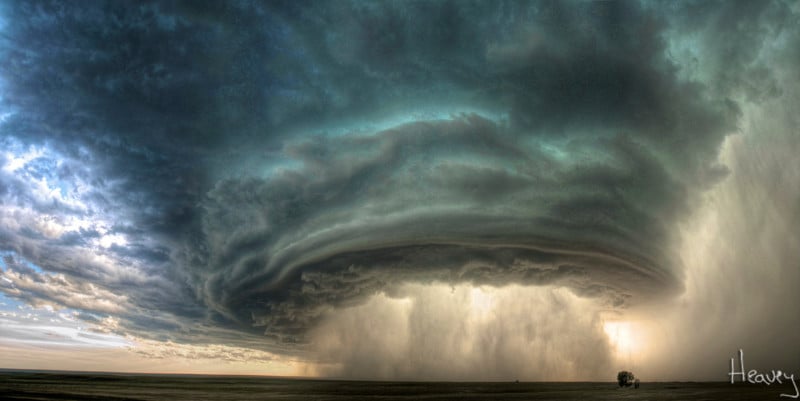
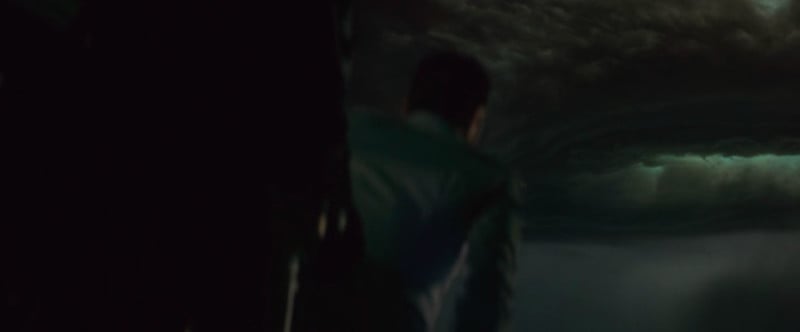
Photographer Sean R. Heavey filed a copyright infringement lawsuit against Netflix for using one of his photographs as concept art for Netflix's Stanger Things and Beyond Stranger Things without his permission. Heavey's photograph, "The Mothership", was taken in 2010 when he was chasing a storm in Montana. That same year, he registered the copyright for the photo with the United States Copyright Office. Additionally, Heavey states that he found his photograph being used in Netflix's movie, How It Ends.

Netflix however, is refusing to acknowledge that they used Heavey's work. Jarin Jackson, Netflix's attorney, said that the cloud formations are similar but nothing else. Jackson stated, "Copyright law, however, does not protect objects as they appear in nature." In the lawsuit, Heavey says that he has suffered damages since Netflix copied and distributed his photograph. He states that Netflix has appropriated his photograph and has opened it up for others to use it without his permission. Heavey filed this lawsuit to further prevent Netflix from using "The Mothership".

https://petapixel.com/2018/09/18/photographer-sues-netflix-for-using-his-storm-photo-for-stranger-things/

Stranger Things:


via GIPHY

"The Mothership":

How It Ends:


Part II: Legal Questions Raised


  • Did Netflix use Heavey's name, picture, likeness, voice, or identity for commercial or trade purposes without his permission?
  • Was Heavey emotionally harmed?
  • Is this an appropriation and right of publicity suit?
  • Can this photo be identified by another person and say that it matches Netflix's concept art?
  • Is Heavey considered "rich and famous"?
  • Has Heavey been financially harmed?
  • Does Netflix's attorney make a reasonable argument saying that copyright does not protect things seen in nature?
Part III: Relevant Doctrine

Appropriation
The plaintiff must prove:
  • Name, picture, likeness, voice, or identity used for commercial or trade purposes without consent
  • Publication: Widespread distribution
  • Identification: Of and concerning the plaintiff
Right to Publicity:
  • usually for the rich and famous
  • deals with financial harm
  • appropriating a person's right to profit
Applying it to Heavey's complaint...

Appropriation:
  • Technically, Sean R. Heavey's is not being used for appropriation but his work is for commercial purposes without his consent (assuming that the photo is the same as the concept art used by Netflix). 
  • Netflix has more than a million subscribers many of whom watched Stranger Things and How It Ends.
  • The article does not state that other people noticed this similarity between the photograph and the art but Heavey did notice it when he watched Beyond Stranger Things.
Right to Publicity:
  • Sean R. Heavey worked in the United States and internationally as well as published his work on various media platforms.
  • The professional photographer has been financially harmed because he has not received any profits/payment for Netflix's use of his photo for their concept art. They have advertised them image internationally and have over a million subscribers worldwide. 
  • Heavey does have a right to reap some of the profit that Netflix has made from his photograph because it has jeopardized how he can claim copyright. 
Part IV: Conclusion
In relation to the questions posed, Heavey was not emotionally harmed by the actions taken by Netflix but they do need to pay for the loss of profit they caused the photographer. Sean R. Heavey has published many of his works in newspapers, national and international magazines, etc. so, he can be considered a well-known professional photographer.

The doctrine does apply to Heavey's "The Mothership" photograph because there are major similarities between the two. I believe that it would depend on the judge's own opinion if the photograph relates the concept art. That is one of the main issues with these types of lawsuits because of its subjective evidence. If I were to decide, it does seem that both images are similar and Netflix would have to pay damages to Heavey because they used it in their advertisement of Stranger Things without the photographer's permission. However, it seems difficult to prove that Netflix appropriated "The Mothership" in How It Ends because the image is blurry and dark. It is very similar to general apocalyptic doom themes.


Wednesday, November 14, 2018

Chapter 10: Obscenity and Indecency

Topic Overview:
In this chapter, we will discuss what is defined by the federal government as obscene and indecent. Miller v. California set the Miller test, which is a three-part test that defines obscenity. Also, it goes further in detail about terms used in the Miller test like, prurient interest and patently offensive. Furthermore, it defines rules for tv and radio broadcasters. Variable obscenity that can be viewed by adults but cannot be distributed to minors.

Defining Terms:

  • Pornography: A vague-not legally precise-because it encompasses both protected and unprotected sexual material. 
  • Indecency: A narrow legal term referring to sexual expression and expletives inappropriate for children on broadcast radio and television. 
  • Obscenity: Defined as relating to sex in an indecent, very offensive, or shocking way. The legal definition comes from Miller v. California-material is determined to be obscene if it passes the Miller test. 
  • Hicklin Rule: Taken from a mid-19th-century English case and used in the US until the mid-20th-century, a rule that defines material as obscene if it tends to corrupt children. 
  • Prurient Interest: Lustful thoughts or sexual desires. 
  • Patently Offensive: Term describing material with hard-core sexual conduct.
  • Serious Social Value: Material cannot be found obscene if it has serious literary, artistic, political, or scientific value determined using national, not local/community, standards. 
  • Variable Obscenity: The concept that sexually oriented material not obscene for adults may be obscene if distributed to minors. 
  • Safe Harbor Policy: A FCC policy designating 10pm to 6am as a time when broadcast radio and tv stations may air indecent material without violating federal law or FCC regulations. 
Important Cases:
Miller v. California (1973): Defendant Marvin Miller sent brochures in a mass mailing to advertise four "adult" books and a film in California. Three-part test that set down the definition of obscenity. 

Federal Communications Commission v. Pacifica Foundation (1978): The Supreme Court said indecent broadcast speech is material in "nonconformance with accepted standards of morality." Broadcasters have First Amendment protection, the Court noted, but the protection is limited because of spectrum scarcity. This allows courts to restrict indecency in broadcasting but not in other media. 

Federal Communications Commission v. Fox Televison Stations Inc. (2012): Supreme Court case that upheld regulations of the FCC that ban "fleeting expletives" on tv broadcasts.

Relevant Doctrine:
The Miller Test:
(All elements must be met)
  1. An average person, using contemporary local community standards, finds work, taken as a whole, appeals to prurient interest (morbid interest in sex)
  2. The material depicts a patently offensive way sexual conduct specifically defined by state law
  3. The material lacks serious literary, artistic, political or scientific value (SLAPS test).

Current Issues or Controversies:
During this last midterm cycle, the Democratic nominee for Senate, Beto O'Rourke of Texas "let loose an obscenity" during his concession speech against Republican nominee Ted Cruz. The news went crazy because O'Rourke dropped the F bomb on network tv.
My Questions/Concerns:

  • How are individual programs on networks like CBS or ABC, held accountable if an FCC regulation is broken?

References:
Trager, Robert., Ross, Susan Dente., & Reynolds, Amy (2018), The Law of Journalism and Mass Communication. Thousand Oaks, CA: Sage Publications. 

Friday, November 9, 2018

Media Law in the News II

Part I: Summary
On October 15th the Trump Administration announced a proposal that would make the Department of Health and Human Services demand that pharmaceutical companies include their manufacturer’s list price on drugs advertised in television commercials. The sole purpose of this proposal is to lower the price people have to pay for prescription drugs and biological products. This ruling would apply to drugs covered by Federal Health Insurance Programs. The Center for Medicare and Medicaid Services has the authority to regulate these companies. However, some argue that this regulation is unconstitutional on two different accounts. First, the Food Drug and Cosmetic Act nor the FDA mention that companies have to disclose prices in print or broadcast advertisements. Second, these companies can file a tort claiming the regulations are content-based.

https://www.bna.com/requiring-price-info-n73014483374/ 

Part II: Legal Questions Raised
·       Is this restriction based on speech content?
·       Does the government have a compelling interest to regulate pharmaceutical companies?
·       Is this regulation narrowly drawn?
·       Does this single out consumer advertisements?

Part III: Relevant Doctrine/ Precedent
Strict Scrutiny is the test for content-based restraints:

  • The government has a compelling interest in restricting speech. Defined as protecting the public safety and welfare. 
  • Narrowly drawn, least restrictive means.

Part IV: Conclusion
In this situation, the pharmaceutical companies could file a tort that states the new regulations are content-based restrictions. The regulations are making a lot of companies abide by Medicare parts and the Medicaid program, saying that “direct-to-consumer” T.V. advertisements of prescription drugs that are covered by Medicare and Medicaid must include the Wholesale Acquisition Cost (list price). The reasoning behind the Trump administration’s proposal is to improve Federal Health Insurance Programs so that citizens who use Medicare and Medicaid may be given important information on the products they consume. The government is making an effort to acknowledge the high costs consumers are burdened with when they have to pay out-of-pocket as well as bills from Medicare and Medicaid.

Furthermore, if these companies were to go to court, they would defend themselves by stating that the government does not have a compelling interest to rigidly apply this rule for advertisements. They do not want government programs to have the authority to restrict their ability to function as a business. Companies like Amgen Inc., an American owned company, have a lot of power over how they choose to sell to consumers and it is not always in the best of interest. Moreover, GlaxoSmithKline Plc. is a company owned in the United Kingdom that also does business in the United States and would be affected by this regulation. In the UK, there are different regulations on how companies disclose information to consumers. I think it is important to acknowledge different motivations companies like these would want to protect the way they operate and advertise to consumers. Therefore, the government is trying to look out for the interest of the people by making sure that pharmaceutical companies are not reasonably pricing their products.

This proposal is not content-based because when the strict scrutiny test applied, the government has the right to protect the welfare of the people and it is done in the least restrictive way possible. By making pharmaceutical companies show their list price the proposal is targeting broadcast advertisements, assuming that broadcast media has the largest audience. The federal government would need to make sure that this regulation would pass the First Amendment. If pharmaceutical companies were to challenge this regulation, the government would win the case. 

Monday, November 5, 2018

Chapter 9: Electronic Media Regulation

Topic Overview:
The FCC originally started as the Federal Radio Commission in 1927 but then changed as new media forms came about in 1934 becoming the Federal Communications Commission (FCC). The point of the FCC is to regulate interstate and international communications. In this chapter, regulations that apply broadcasters and system operators will be discussed.


Defining Terms:

  • Federal Radio Commission: A federal agency established by Radio Acct of 1927 to oversee radio broadcasting. The Federal Communications Commission succeeded the Federal Radio Commission in 1934.
  • Federal Communications Commission: An independent U.S. government agency, directly, responsible to Congress, charged with regulating interstate and international communications by radio, television, wire, satellite, cable, and broadband. The Communications Act of 1934 established the Federal Communications Commission; its jurisdiction covers the 50 states, the District Columbia and U.S. possessions.  
  • Notice of proposed rulemaking: A notice issued by the FCC announcing that the commission is considering changing certain of its regulations or adopting new rules. 
  • Spectrum Scarcity: The limitation to the number of segments of the broadcast spectrum that may be used for radio or tv in a specific geographical area without causing interference. 
  • Broadband: A high-capacity transmission technique that uses a wide range of frequencies, which enables a large number of messages to communicate simultaneously. 
  • Fairness Doctrine: The FCC rule requiring broadcast stations to air programs discussing public issues & include a variety of views about controversial issues of public importance. 
  • Lowest Unit Rate: A station's min advertising rate & the max rate a broadcaster or cable system may charge a politician for advertising time during the 45 days before primary elections and the 60 days before general elections.
  • Zapple Rule: A political broadcasting rule that allows a candidate's supporters equal opportunity to use broadcast stations if the candidate's opponents' supporters use the stations. 
  • Must-carry Rule: Regulations enacted under the federal cable law that require multichannel video programming distributors to transmit local broadcast tv stations. 
  • Retransmission Consent: Part of the federal cable law allowing broadcast stations to negotiate. 
  • Satellite Market Modification Rule: Allows a tv station, satellite operator or county government to request the addition or deletion of communities from a broadcast station's local tv market to better reflect current market realities. 
  • PEG access channels: Channels that cable systems set aside for public, educational and government use. 
  • Online video distributor: Entities that provide video programming using the internet or internet protocol-based transmission paths provided by an outside entity.
  • Net Neutrality: The principle that holds that internet service providers cannot charge content providers to speed up the delivery of their goods-all treated equally.
Important Cases: 
Red Lion Broadcasting Co. Inc. v. Federal Communications Commission (1997): Established spectrum scarcity as the main justification for the government's intervention in broadcasting. The Supreme Court refused to accept the cable industry's argument that the must-carry rules were content specific. 

Turner Broadcasting System Inc. v. Federal Communications Commission: The Supreme Court held that cable operators were required to carry signals of local broadcast stations. Applied the First Amendment test it uses for print media to cable: if the regulation is content-neutral, apply an intermediate standard. 


Current Issues or Controversies: 
Net Neutrality, the Obama administration was on its way to helping internet usage become a utility to stop the monopoly holds of the companies providing service. Everyone is to be charged in the same way and given the same access. However, in 2017 the Trump administration started to deregulate and go back on open internet, what the Obama administration was trying to protect. 
My Questions/Concerns:


References:
Trager, Robert., Ross, Susan Dente., & Reynolds, Amy (2018), The Law of Journalism and Mass Communication. Thousand Oaks, CA: Sage Publications. 

Thursday, November 1, 2018

Chapter 6: Protecting Privacy

Related image

Topic Overview:
The U.S. Constitution highlights citizens' rights to privacy and how one would be able to protect themselves from intrusion, false light, appropriation, and private facts. This chapter discusses what an individual needs prove in court and defenses a defendant can use in order to rebut the plaintiff's argument. Intrusion and appropriation are the main privacy laws that will be covered. Intrusion can either be physical or technological and the ways in which this invasion of privacy can occur is further discussed in the chapter. Lastly, appropriation means using someone's name likeness, etc. for commercial or trade purposes without permission. 
Defining Key Terms:
  • False Light: A privacy tort that involves making a person seem in the public eye to be someone he or she is not. Several states do not allow false light suits.
  • Distortion: Occurs when facts are omitted or the context in which material is published makes an otherwise accurate story appear false. 
  • Fictionalization: Occurs when some truth, such as a person's name or identifying characteristics, is part of a largely fictional piece.
  • Appropriation: Using a person's name, picture, likeness, voice, or identity for commercial or trade purposes without permission.
  • Commercialization: The appropriation tort used to protect people who want privacy; prohibits using another person's name or likeness for commercial purposes without permission.
  • Right of Publicity: The appropriation tort protecting a celebrity's right to have their name, picture, likeness, voice, and identity used for commercial or trade purposes only with permission. 
  • Transformative Use Test: To determine whether a creator has transformed a person's name, picture, likeness, voice, or identity for artistic purposes. If so, the person cannot win a right of publicity suit against the creator. 
  • Predominate Use Test: To determine whether the defendant used the plaintiff's name or picture more for commercial purposes or protected expression. 
  • Intrusion Upon Seclusion: Physically or technologically disturbing another's reasonable expectation of privacy.
  • Private Facts: The tort under which individuals or media are sued for publishing highly embarrassing private information that is not newsworthy or lawfully obtained from a public record.
  • Data Broker: An entity that collects and stores personal information about consumers, then sells that information in other organizations. 

Important Cases:
Cox Broadcasting Corp. v. Cohn: The Supreme Court held that the interests of privacy "fade" in cases where controversial "information already appears on the public record." It is an encroachment on press freedom when the law restricts the media.

Riley v. California: Extended expectation of privacy to digitally stored information (cops cannot search phones without warrants).

Relevant Doctrine:
Plaintiff's Case for Intrusion:
Plaintiff must prove
  • Reasonable expectation of privacy
  • The intrusion was highly intrusive
  • The intrusion was highly offensive to a reasonable person

Plaintiff's Case for Appropriation:
Plaintiff must prove
  • Name, picture, likeness, voice, or identity used
  • For commercial or trade purposes
  • Without permission
Current Issues or Controversies:
In early October, photographer Lynn Goldsmith accused Andy Warhol of appropriating her photograph of Prince. Goldsmith had given Vanity Fair permission to use her photo of Prince only once as material to be used for an artist's illustration i.e., Warhol. However, Goldsmith later discovered that Warhol had created 15 versions of the illustration used in Vanity Fair. Goldsmith is suing Andy Warhol for artistic appropriation because she had only granted a license to Vanity Fair for one illustration.

My Questions/Concerns:

  • If an individual uses a celebrities likeness/picture for their business on Etsy or their own personal website, when should an individual know that they could get sued? (A lot of people are able to do this without garnering attention but when should someone be concerned about this happening to them?)
References:
Trager, Robert., Ross, Susan Dente., & Reynolds, Amy (2018), The Law of Journalism and Mass Communication. Thousand Oaks, CA: Sage Publications. 

Friday, October 26, 2018

Media Law in the News

Part I: Summary
The area of law is libel.

This October writer and editor in chief at the Rumpus, Stephen Elliott, filed a lawsuit against Moira Donegan for publishing his name in a google spreadsheet titled "Shitty Media Men". Donegan shared this spreadsheet to create a safe space for women to anonymously report men in the media industry who have sexually assaulted and harassed them. Elliott is suing for libel, claiming that after his name was published he became emotionally distressed and his career was destroyed because of the false claims made. He is asking for $1.5 million in damages against Donegan and the individuals who wrote his name in the spreadsheet, claiming that the actions taken by these people were done purposefully to damage his reputation.
Part II: Legal Questions Raised

  • Is Stephen Elliot a public figure?
  • Is Moira Donegan responsible for the allegations if she did not write them herself?
  • Are the allegations true? If not, did the individuals who accused Elliot do so maliciously or was it negligence?
  • Can Stephen Elliot prove falsity?
  • Would the community think differently of the plaintiff if the story were completely accurate?
  • Will the defendant need to pay actual and punitive damages?
  • Was Donegan wrong for publishing the spreadsheet and having no credible sources?

Part III: Relevant Doctrine
Plaintiff's Case for Libel
  1. A statement of fact
  2. That is published,
  3. That is of and concerning the plaintiff
  4. That is defamatory, 
  5. That is false,
  6. That causes damage (or harm) and 
  7. For which the defendant is at fault.
Applying the test to the case...
Publication: Seen or heard by a third party? Yes, the spreadsheet with the plaintiff's name was distributed to many people through people and then linked online.
Identification: The story is "of and concerning" the plaintiff. Stephen Elliott's name was on the spreadsheet and many connected him to the sexual assault accusations.
Defamation: Was the plaintiff's reputation harmed? What do other people think about the plaintiff?
Stephen Elliott's reputation was harmed because of the allegations. He states that people in the industry did not want to work with him, friends distanced themselves, and sales on his most recent book did not do well.
Fault: Were the defendants' actions actual malice or negligent? 
At this point, there is not much information as to whether or not the individuals who accused Elliott in the spreadsheet were telling the truth. However, after he wrote a piece for Quillette and an Op-Ed for the New York Times a former colleague, Lyz Lenz, tweeted her experience of when Elliott had sexually harassed her. It does not seem that Moira Donegan can be held accountable for what other people wrote on her shared spreadsheet.
Falsity: Is the statement not "substantially true"? Would the community think differently of the plaintiff if the story were completely accurate?
It seems as though these allegations of sexual assault and harassment come from actual experiences individuals have had with Elliott.
Damages: Will the defendants be charged actual or punitive damages?
No, I do not think that it is possible for the defendants to be charged because the plaintiff cannot prove actual malice. Elliott will not be able to get the names of the individuals who wrote his name on the spreadsheet. Donegan will probably not have to pay damages to Elliott because she hosted third-party content, she did not accuse Elliott herself.

The Ollman Test:
  1. Do the words have a commonly accepted meaning?
  2. Can the statement be found to be true or false?
  3. In what specific context do the words appear?
  4. Broader Social Context: Is this a place where expression of opinions is common?
Applying it to the case...
Here the defendant's statements cannot be protected as an opinion defense because the accusations were made by anonymous individuals and there is not a lot of evidence to prove the statements are true. 

Part IV:
Overall, my analysis revealed that it would be difficult for Stephen Elliott to prove actual malice because he is a public figure or a limited purpose public figure. Elliot has several books published and is an editor for a literary website called Rumpus. Furthermore, Moira Donegan cannot be held responsible for what others wrote about Elliott. Under Section 230 of the Communications Decency Act of 1996, Donegan could be protected as a user of an interactive computer service (in this case Google) and cannot be treated as the publisher or speaker of any information provided by another information content provider (anonymous individuals).
I am satisfied with most of the questions posed in part II but I do not see how Elliott believes that Google would give him the emails of the individuals who contributed to the spreadsheet. Additional information to be considered in the case is evidence to prove if the allegations are true or false. By looking at this lawsuit, I understand better the libel law and how a plaintiff would have to go about proving defamation. How a libel case would proceed would depend if the person was a public or involuntary figure and if they could prove actual malice.

Monday, October 22, 2018

Chapter 5: Libel Defenses and Privileges


Topic Overview:
Defense options for those sued for libel depend on whether the statement was protected by the First Amendment. This chapter goes into the nine different ways in which a person can defend themselves against a libel lawsuit. Specifically, it discusses how a journalist is able to defend themselves if they have done their work to the best of their ability without actual malice or negligence. Neutral reportage states that the media should not be restrained from reporting an accusation as long as it was done fairly and objectively.


Defining Key Terms:
  • SLAPP (strategic lawsuit against public participation): A lawsuit whose purpose is to harass critics into silence, often to suppress those critics' First Amendment rights. 
  • Fair Report Privilege: A privilege claimed by journalists who report events on the basis of official records. The report must fairly and accurately reflect the content of the records; this is the condition that sometimes leads to this privilege being called "conditional privilege."
  • Absolute Privilege: A complete exemption from liability for the speaking or publishing of defamatory words of and concerning another because the statement was made within the performance of duty such as in judicial or political contexts. 
  • Conditional (qualified) privilege: An exemption from liability for repeating defamatory words of and concerning another because the original statement was made within the performance of duty such as in judicial or political contexts, on the premise that the reporting is fair and accurate. 
  • Fair comment and criticism: A common law privilege that protects critics from lawsuits brought by individuals in the public eye. 
  • Neutral Reportage: An accusation made by a responsible & prominent organization, that the accusation is protected by the First Amendment even when it turns out the accusation was false and libelous. Recognizes the First Amendment principle of the free flow of information and ideas is important. 
  • Single-publication rule: A rule that limits libel victims to only one cause of action even with multiple publications of the libel. 
  • Retraction Statues: State laws that limit the damages a plaintiff may receive if the defendant had issued a retraction of the material at issue, meant to discourage the punishment of any good-faith effort of admitting a mistake. 
Important Cases: 
Ollman v. Evans: Columnist Robert Evans wrote a piece about NYU Professor Ollman, calling his a Marxist and that he was trying to prepare his students for a revolution. Is it a statement of fact (maybe false) or pure opinion? A statement of pure opinion is protected under the First Amendment. The Ollman test was created.
Milkovich v. Lorain Journal Co.: The First Amendment defense covers two categories of opinion statements: hyperbole or exaggerated statements no one would believe and vague evaluations unable to be proved. 

Relevant Doctrine:
The Ollman Test (balancing test):
  1. Verifiability: Do the words have a commonly accepted meaning? If so, it is likely to be a fact than opinion. 
  2. Common Reading: Can the statement be found to be true or false? If so, it is more likely fact than opinion. 
  3. Journalistic Context: In what specific context do the words appear? (e.g. opinion column)
  4. Social Context: In what broader context do the words appear? (e.g. labor dispute) Is this a place where expression of opinions is common? 
Neutral Reportage: 
The First Amendment is a defense in a libel case if the following apply:
  • The story is newsworthy & related to a public controversy.
  • The accusation is made by a responsible person or group.
  • The charge is about a public official, public figure, or public organization.
  • The story is accurate, containing denials or other views.
  • The reporting is neutral.
The Wire Service Defense: 
The wire service defense may be applied as long as the following are present:
  1. The defendant received material containing the defamatory statements from a reputable newsgathering agency. 
  2. The defendant did not know the story was false.
  3. Nothing on the face of the story reasonably could have alerted the defendant that it may have been incorrect.
  4. The original wire service story was published without substantial change.
Current Issues or Controversies:
Former sheriff Arpaio is suing the New York Times and writer of an Op-Ed for libel. Some of the defenses that can be made are a truth, if the accusations can be backed by evidence, and opinion, because the writer is allowed to publish their opinion on a public figure.

My Questions/Concerns:
Does the statute of limitations apply from when the person who wrote the article new about the information or when a third party is made known of the information? Can other writers bring up the same issue/information if they have something new to add?

References:
Trager, Robert., Ross, Susan Dente., & Reynolds, Amy (2018), The Law of Journalism and Mass Communication. Thousand Oaks, CA: Sage Publications. 

Monday, October 15, 2018

Chapter 4: Libel and Emotional Distress

Topic Overview:
This chapter discusses the conditions in which an individual is able to sue for libel and win in court. The plaintiff must prove that the defendant is at fault for publishing defaming material. It is important to note the distinction between parody and actual malice. Intentional Infliction of Emotional Distress test emphasizes that the defendants intentional or reckless actions involved actual malice that caused severe emotional distress.

Defining Key Terms:

  • Damages: Monetary compensation that may be recovered in court by any person who has suffered loss or injury.
  • Sedition Act of 1798: Made it a crime to write "any false, scandalous and malicious" statements against either the president or congress. (The act expired in 1801)
  • Burden of Proof: The requirement for a party to a case to demonstrate one or more claims by the presentation of evidence. (In libel law, the plaintiff has the burden of proof.)
  • Communications Decency Act: The part of the 1996 Telecommunications At that largely attempted to regulate internet content. The Communications Decency Act was successfully challenged in Reno v. American Civil Liberties Union (1997).
  • Libel per se: A statement whose injurious nature is apparent and requires no further proof. 
  • Libel per quod: A statement whose injurious nature requires proof. 
  • Actual Malice: In libel law, a statement made knowing it is false or with reckless disregard for its truth. 
  • All-purpose public figure: In libel law, a person who occupies a position of such persuasive power and influence as to be deemed a public figure for all purposes. 
  • Limited-purpose public figure: In libel law, those plaintiffs who have attained public figure status within a narrow set of circumstances by thrusting themselves to the forefront of particular public controversies in order to influence the resolution of the issues involved; this kind of public figure is more common than the all-purpose public figure. 
  • Bootstrapping: In libel law, the forbidden practice of a defendant claiming that the plaintiff is a public figure solely on the basis of the statement that is the reason for the lawsuit. 
  • Private Figure: Plaintiff who cannot be categorized as either a public figure or a public official. In order to recover damages, a private figure is required to prove not actual malice but merely negligence on the part of the defendant.
Important Cases: 
New York Times Co. v. Sullivan: Established the "actual malice" standard. In cases of libel, public figures must prove that the author had "knowledge of falsity and reckless disregard for the truth".
Hustler Magazine Inc. v. Falwell: The first amendment protected the magazine's Campari ad. A public figure/official who could prove that a satire included a false statement of fact published with actual malice could win a lawsuit for IIED. 

Relevant Doctrine: 
Libel Test:


  • A statement of fact (not opinion)
  • that is published
  • is of and concerning the plaintiff
  • is defamatory
  • is false
  • is the result of fault by the defendant
  • And causes injury [or harm] to plaintiff
Intentional Infliction of Emotional Distress:
  • Extreme and outrageous conduct
  • Beyond the bounds of decency tolerated in a civilized society
  • The conduct caused severe emotional distress
  • The conduct was intentional or reckless
Current Issues or Controversies: 
In September of this year, a British cave diver who helped rescue the Thai boys sued Elon Musk for making accusations without evidence. Elon Musk accused the diver of being a "child rapist" on Twitter on several different occasions. The cave diver is seeking $75,000 in compensation and an injunction against Musk. 

My Questions/Concerns:

  • What kind of evidence would be needed to show proof that the defendant is at fault and it caused injury? Is the plaintiff more likely to win a case if they were physically injured?
References:
Trager, Robert., Ross, Susan Dente., & Reynolds, Amy (2018), The Law of Journalism and Mass Communication. Thousand Oaks, CA: Sage Publications. 

Monday, October 8, 2018

Chapter 3: Speech Distinctions

Image result for protest gif


Topic Overview:
This chapter discusses when the government has the right to have agency over the first amendment. Usually, the government would limit our freedoms if there were to be a threat to our national security i.e., clear and present danger. In addition, when the government has the right to stop someone or a group of individuals from expressing their freedom of speech if there is "imminent lawless action." This chapter also questions the media's role and if it has the ability to incite harm.

When individuals express their views it can sometimes lead to offensive speech but it is often difficult to note the boundaries of legal and illegal behavior under the first amendment. When words are not protected they are known as fighting words. Another term that could fall under that category would be hate speech because it can make others feel unsafe and stop them from fully participating in their first amendment rights. However, it is usually hard to win this argument in court. It is imperative to note the differences between types of speech because the government can only act when there is an immediate danger. There are specific forums in which people are legally able to protest or express their opinion.

Defining Key Terms:

  • USA Patriot Act: The Uniting and Strengthening America by Providing Appropriate Tools Required to Intercept and Obstruct Terrorism Act of 2001. The act gave law enforcement agencies greater authority to combat terrorism. 
  • Chilling Effect: The discouragement of a constitutional right, especially free speech, by any government practice that creates uncertainty about the paper exercise of that right. 
  • Clear and Present Danger: Doctrine establishing that restrictions on First Amendment rights will be upheld if they are necessary to prevent an extremely serious and imminent harm. 
  • Incorporation Doctrine: The 14th Amendment concept that most of the Bill of Rights apply equally to states. 
  • Negligence: Generally, the failure to exercise reasonable or ordinary care. 
  • Proximate Cause: The legal determination of whether it is reasonable to conclude the defendant's actions led to the plaintiff's injury. 
  • Fighting Words: Words not protected by the First Amendment because they cause immediate harm or illegal acts. 
  • Underinclusive: A First Amendment doctrine that disfavors narrow laws that target a subset of a recognized category for discriminatory treatment. 
  • Viewpoint-based Discrimination: Government censorship or punishment of expression based on the ideas or attitudes expressed. Courts will apply a strict scrutiny test to determine whether the government acted constitutionally. 
  • True Threat: Speech directed toward one or more specific individuals with the intent of causing listeners to fear for their safety. 
Important Cases:
Tinker v. Des Moines Independent Community School District: The Court established the school classroom as a location that is "peculiarly the marketplace of ideas" where speech may be regulated only to prevent a "substantial disruption" to school activities.  
Elonis v. the United States: The Supreme Court relied on statutory construction to conclude only that a conviction for threats online, like any criminal conviction, requires a showing that the defendant intended to violate the law and make a true threat. 

Relevant Doctrine:
Fighting Words
Under the Supreme Court's fighting words doctrine, the First Amendment does not protect words that

  1. Are directed at an individual and
  2. Automatically inflict emotional harm or trigger violence

True Threats 
Speech directed toward one or more specific individuals with the intent of causing listeners to fear for their safety.
Incitement/Brandenberg Test
Advocacy of illegal action may be punished if it is:

  1. Directed at inciting or producing imminent lawless action
  2. and likely to incite or produce such action
Media Negligence:
To win a lawsuit for injury caused by media negligence, the plaintiff must prove a breach of the media's duty of care because the content posed a:
  1.  Reasonable foreseeability of harm
  2. Proximate (directly related) cause of harm


Current Issues or Controversies:
 Trump has incited violence, hate speech, and has never publicly condoned such behavior. He also gets away with a lot of the things that he decides to say in rallies and social media.

My Questions/Concerns:

  1. What will it take for Facebook to regulate what people post?

References:
Trager, Robert., Ross, Susan Dente., & Reynolds, Amy (2018), The Law of Journalism and Mass Communication. Thousand Oaks, CA: Sage Publications. 

Monday, October 1, 2018

Chapter 2: The First Amendment


Topic Overview:
The first amendment provides the American public with the ability to speak on topics that are important but that might not necessarily be the same opinion of others. However, the United States still holds a limit on what exactly citizens can say and do and where they can express their viewpoints. In this chapter, we discuss how the judicial branch applies the first amendment and on what lands people are able to express their opinions.


Defining Key Terms:

  • ad hoc balancing: Making decisions according to the specific facts of the case under review rather than more general principles. 
  • Categorical Balancing: The practice of deciding cases by weighing different broad categories to create general rules that may be applied in later cases with similar. 
  • Seditious Libel: Communication meant to incite people to change the government; criticism of the government. 
  • Injunction: Court order prohibiting a person or organization from doing some specified act. 
  • Strict Scrutiny: A court test to determine the constitutionality of laws aimed at speech content.
  • Symbolic Expression: An action that warrants some First Amendment protection because its purpose is to express ideas. 
  • Intermediate Scrutiny: A standard applied by the courts to review laws that implicate core constitutional values. 
  • Important Government Interest: An interest of the government that is substantial or significant but not compelling. 
  • Traditional Public Forums: Free speech is protected in like public streets, sidewalks, and parks. 
  • Designated Public Forums: Government spaces or buildings that are available for public use (within limits). 
  • Nonpublic Forums: Government-held property that is not allowed to be used for public speech and assembly purposes. 
Important Cases: 
New York Times Co. v. The United States (1971): The Supreme Court ruled that a court order preventing publication based on information linked from the Pentagon was unconstitutional based on prior restraint. Prior restraint is only allowed when it is clear that the release of information would lead to harm/danger. 
Reed v. Town of Gilbert (2015): The town's sign law was in violation of strict scrutiny, therefore it was unconstitutional.  

Relevant Doctrine: 
The Near Test (1931)
Prior Restraints are constitutional when necessary to prevent:
  • Obstruction of military recruitment
  • Publication of troop locations, numbers, and movement (national security)
  • Foreseeable overthrow of government
  • Obscene publications
  • Incitements to violence
  • Fighting words

Strict Scrutiny
  1. Be necessary and 
  2. Use the least restrictive means
  3. To advance a compelling government interest


Intermediate Scrutiny
  1.  Fall within the power of government and
  2. Advance an important or substantial government interest that is unrelated to the suppression of speech and 
  3. Be narrowly tailored to impose only an incidental restriction on First Amendment freedoms. 


Current Issues or Controversies:
The current U.S. president and his administration do not think that it is right for the press should speak out in such a harsh and critical way of the government but the job of journalists is not to withhold information from the public. I think that the way this administration behaves and speaks out against the media has contested with first amendment freedoms.


My Questions/Concerns:


  1. What is an example of regulated speech?
  2. For a content-based law what qualifies as "compelling government interest"?
  3. In Reed v. Town of Gilbert, the city was not allowed the create categories for signs because there were too many regulations?
References:
Trager, Robert., Ross, Susan Dente., & Reynolds, Amy (2018), The Law of Journalism and Mass Communication. Thousand Oaks, CA: Sage Publications. 


Sunday, September 30, 2018

Chapter 1: The Rule of Law

Image result for supreme court gif


Topic Overview:
The Rule of Law is how a society defines the proper and consistent creation and application of the law. It is used to determine if the laws align with the U.S. Constitution and if they exemplify proper behavior between people and people and their government. Chapter one explains how the court system works and how clear laws are used to determine a court's ruling. Even though the decisions of the court set a precedent for years to come, changes in society also affect new laws created by legislatures.

The structure of the judicial branch within state and federal courts allow for review in trial courts and courts of appeal. Specifically, the Supreme Court plays a massive role in how the country interprets the U.S. Constitution when new cases arise.

Defining Key Terms:

  • Discretion: The authority to determine the proper outcome. 
  • Overbroad Law: A principle that directs courts to find laws unconstitutional if they restrict more legal activity than necessary. 
  • Forum Shopping: A practice whereby the plaintiff chooses a court in which to sue because they believe the court will rule in their favor. 
  • Statutory Law: Written law formally enacted by city, county, state and federal legislative bodies. 
  • Equity Law: Created by judges to decide cases based on fairness/ethics. 
  • Amicus brief: Submission to the court from amicus curiae.
  • Amicus Curiae: "friends of the court"--interested individuals or organizations that are parties in the case. 
  • Per Curiam opinion: An unsigned opinion by the court as a whole.
  • Memorandum order: An order announcing the vote of the Supreme Court without providing an opinion. 
  • Demurrer: Request for a court to dismiss a case because even though claims are true they are insufficient to warrant a judgment against the defendant.
Important Cases:
Marbury v. Madison (1803): Declared an act of Congress unconstitutional and established the principle of judicial review. 

Citizens United v. Federal Election Commission (2010): Campaigns are allowed to be financed by corporations and unions because it is a right given by the First Amendment. 

Relevant Doctrine: 

Current Issues or Controversies:
President Trump nominated Judge Brett Kavanaugh in July after Supreme Court Judge Anthony Kennedy announced his retirement. However, before Judge Kavanaugh could be approved by the Senate and confirmed allegations of sexual assault have been released. Last week, Dr. Christine Blasey Ford testified in front of the Senate Judiciary Committee and how she was sexually assaulted by Kavanaugh during high school. Many people strongly argue that Kavanaugh will not be confirmed because of partisan issues. Republicans believe that Senate Democrats just want to stop another conservative judge from being confirmed to the Supreme Court. 


Questions:
  1. How long will it take for the FBI to investigate Judge Kavanaugh?
  2. Is it a big issue that these sexual assault allegations were not released earlier?

References:
Trager, Robert., Ross, Susan Dente., & Reynolds, Amy (2018), The Law of Journalism and Mass Communication. Thousand Oaks, CA: Sage Publications.